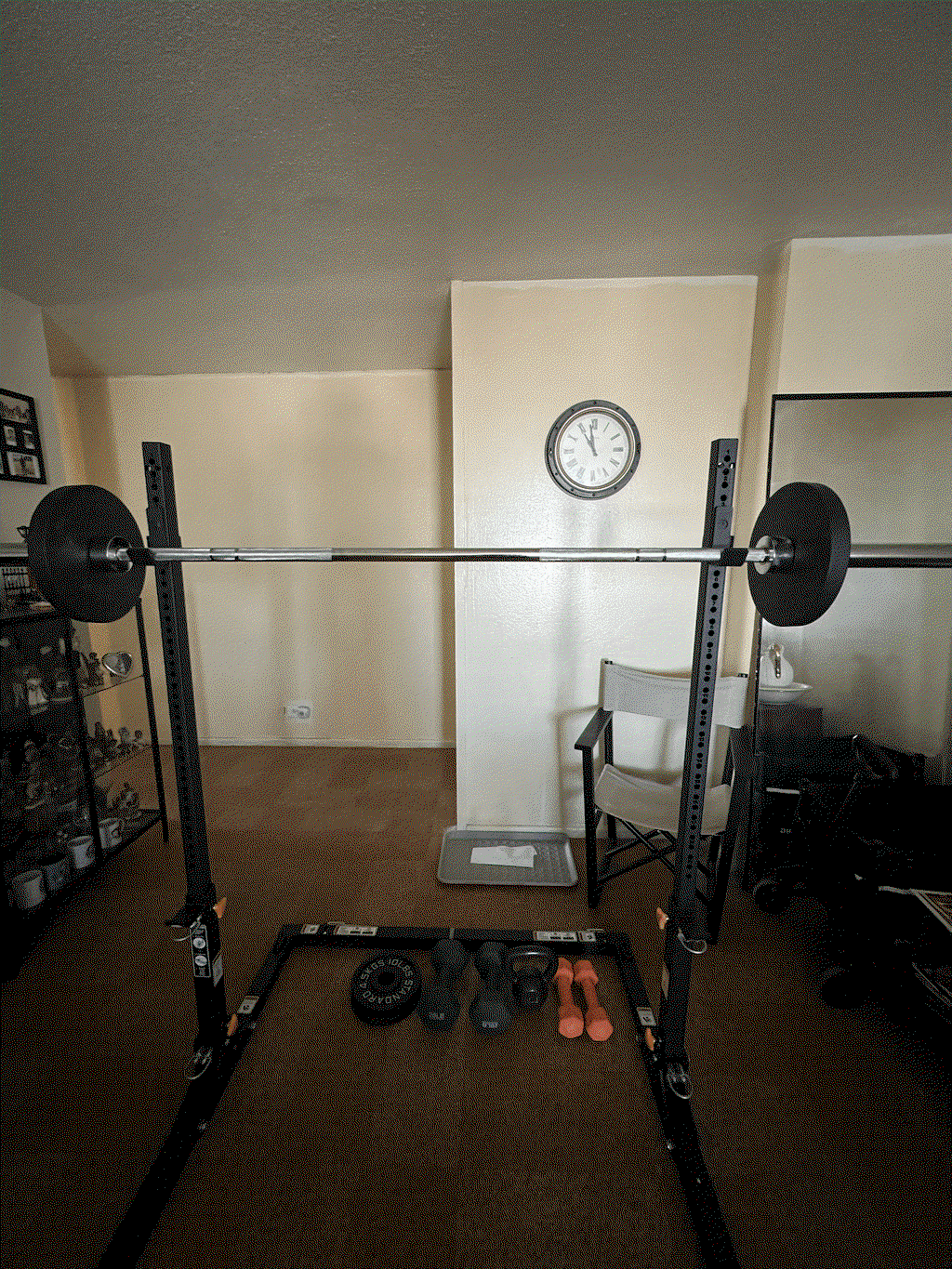
TESTING A 1 REP MAX — The Right Way
By Shane Robert
Testing a 1 Rep Max (1RM) is one of the simplest ways to measure strength progress and a cornerstone of program creation. Whether you’re lifting for the first time or preparing for a powerlifting meet, the goal is the same: work up to the heaviest weight you can lift once with good technique. The mistake most people make is turning max testing into chaos — too many warm-ups, jumps that are too big, or taking random attempts based on emotion. A good 1RM test should feel organized, predictable, and repeatable.
The protocol shared below works for beginners testing their first max, as well as experienced lifters dialing in attempt selection.
What Counts as a True 1RM?
A true 1RM is the heaviest weight you can lift once using (competition) standard technique, without technical breakdown and without assistance from a spotter. A successful max attempt should be hard, but not sloppy. If your form completely falls apart, or you are shortening the range of motion, you probably overshot the weight and it doesn’t count.
A successful max test starts before you touch the bar. In an ideal world, you won’t test a 1RM after poor sleep or high stress levels, but at least trying to reduce training fatigue for several days beforehand and trying to be well-fed, rested and hydrated on the test day will go far.
If testing multiple lifts in one session, use an order that minimizes overlapping fatigue and sequences technically demanding movements earlier in the order. The standard powerlifting competition order is:
- Squat
- Bench Press
- Deadlift
This minimizes fatigue overlap by giving the legs/back a break with benching between squats and deads. If additional movements were to be tested, for example, an overhead press, clean or snatch, those would come first. On the other hand, something like a curl or chin-up is fine coming after.
It’s important to note when testing a squat or bench 1RM, use safeties and experienced spotters whenever possible. Do not rely on random gym members who don’t know how to spot! Deadlifts generally do not require spotters.
The 1RM Testing Protocol — Warming Up
The goal of a warm-up is to arrive at your max feeling grooved and strong with as little fatigue as possible. You accomplish that by doing fewer reps per warm-up set and, if needed, more sets. If a weight feels somewhat technically off, or slow, or you feel tight, simply repeat as many low rep sets with that weight until the movement starts to feel good. Once the movement feels like it should, take measured jumps in weight, lowering the reps each time.
Spend 5-10 minutes increasing body temperature and moving well before touching a bar. Riding a bike, incline walking, sled pulling, etc., are all great options. Move from the general warmup to dynamic mobility, muscle recruitment, and flexibility drills, then start empty bar movement prep. Increase your readiness to lift; don’t exhaust yourself.
After the general warm-up, move on to the empty bar and gradually increase weight while reducing reps. If you have no idea what your 1 rep max is, base it on a rep max that you have done in training. You can use a 1RM calculator to get a predicted number to base things off of, but keep in mind, they are only generalizations and become less accurate the higher the reps. Another option would be to base the numbers on your first attempt, which should be something you could triple on most days and represents roughly 90-92% of your potential max.
With the max number in hand, a simple, specific warm-up progression looks like this:
- Empty bar: as many sets as needed to feel good
- 30-40%: 2-3 x 8-10
- 50%: 2-3 x5
- 60%: 1-2 x4
- 70%: 2x2
- 80%: 1-2 x1-2
- 85% 1-2 x1
None of these sets should feel difficult. The goal is preparation, not fatigue. Each person is different and has to determine the correct amount of work for each percentage for themselves.
Attempt Selection
The best approach is to start conservatively early and aggressively late.
- Attempt 1: 90–92% of your expected max. This should move fast and build confidence. If your opener feels heavy, adjust expectations downward.
- Attempt 2: 97–101% of your expected max. Your second attempt should be close to your current/previous best. This is often where you match or slightly beat a previous PR.
- Attempt 3: 100%+ a true Max Attempt. Your third attempt is your biggest lift of the day. Increase based on bar speed and how the previous attempt felt. Adding somewhere between 1%-5% of your previous max is typically reasonable, depending on how advanced someone is and how well the training cycle went. It is rare that someone will add more from a single training cycle, even a long one. For a beginner testing for the first time, it is possible that they vastly underestimate their ability, and the number they end up doing will be well over 5%.
*An important note on rest times: As weights get heavier, rest longer.
During warm-up sets, 1-3 minutes is typical. Once you get into heavy singles and max attempts, 3-5 minutes. During a meet, this will often be significantly longer, but that is far from ideal. The idea is not to rush heavy attempts, so adjust accordingly based on your experience with between-set recovery.
Conclusion
The best 1RM testing sessions are controlled, efficient, and repeatable. Whether you’re testing your first max or selecting attempts for competition day, consistency wins. That means warming up gradually with low reps, making smart jumps, and not randomly choosing weights. Following the concepts outlined above will ensure a successful test.