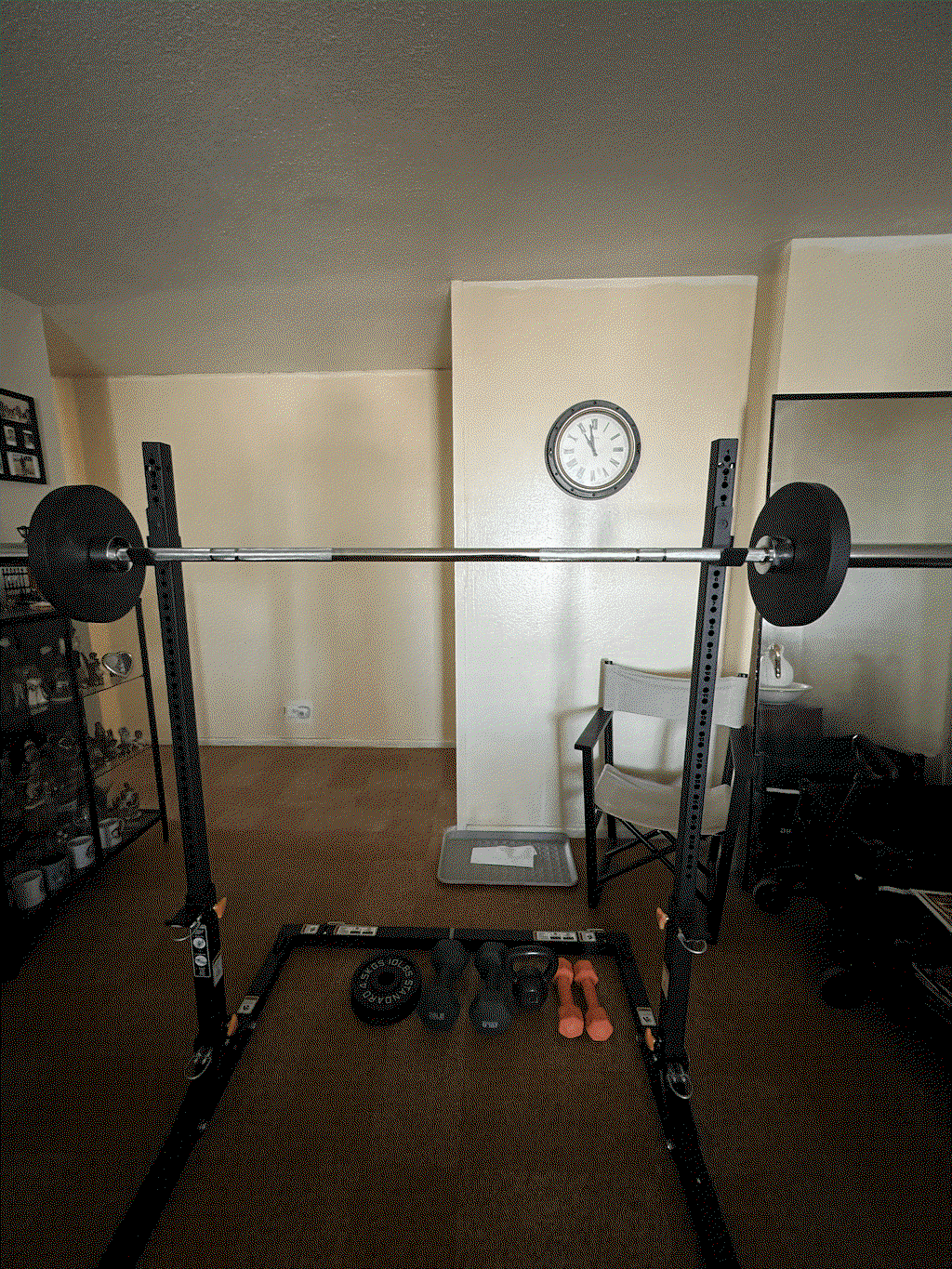
IDENTIFYING WEAK POINTS (PART 2) - SQUAT
By Shane Robert
2/2/2025
Every “hardcore” lifter loves the squat. At least, they love to say they love the squat for the perceived street cred. This is the same crowd that will say things like, “just squat more,” or, the more meme-able “shut up and squat!”
While there is some truth to the idea that practicing a movement, shutting up and squatting, in this case, may be useful for some, for others, this might actually create more problems. If there is a glaring weak point in a movement pattern, simply spamming that movement pattern will keep strengthening the strong points while doing nothing for the weaknesses. Over enough reps, you’ve now built bad technical habits and never addressed the issue. This is a good way to not make any progress at all.
Training squat weaknesses is a bit more complex than bench, as discussed in part 1, due to the larger overall movement and muscles involved. Essentially, a lot more can go wrong. However that doesn’t change our strength training formula:
Train the Movement + Strengthen the weak point(s) of the main movement
= Stronger
The 5 problem areas that we will discuss are:
- Good Morning Squat
- Weak Out The Bottom
- Valgus
- Instability
- Upper Back
1. GOOD MORNING SQUAT—Weak Quads
We’ve all seen the good morning squat. It usually starts with a deep hinge at the beginning and reverses out of the hole with the hips shooting up and the back remaining nearly parallel to the floor throughout the whole range of motion. With the exception of the fewer weirdly built individuals, this is because of weak quads.
|
SECONDARY MOVEMENTS |
|
|
1–5 sets of 1–5 reps |
|
SUPPLEMENTAL MOVEMENTS |
|
|
3–5 sets of 5–10 reps |
|
ACCESSORY MOVEMENTS |
|
|
3–5 sets of 10–20 reps |
2. WEAK OUT OF THE BOTTOM—generally weak
This is the fear of most neophyte squatters. They will go down to the bottom, be unable to move the bar and die. In most cases, the only thing that dies is your ego. To be clear, weak out of the bottom can mean anything from the very end range of motion, up to a few inches above that. It can be caused by a number of things, such as weak quads, hamstrings and glutes, aka being weak, to my reckoning it comes down to weak drive.
|
SECONDARY MOVEMENTS |
|
|
1–5 sets of 1–5 reps |
|
SUPPLEMENTAL MOVEMENTS |
|
|
3–5 sets of 5–10 reps |
|
ACCESSORY MOVEMENTS |
|
|
3–5 sets of 10–20 reps |
3. VALGUS (knee collapse)—weak hips
This issue is one that not only looks ugly when it happens, it is probably the most likely to lead to injury of all the issues on this list. Though it is common in both males and females, for many female lifters, this will be an ongoing issue throughout their lifting careers due to their Q angle, the angle difference between the hip and knee joints. Unfortunately, this is the anthropometry they were given and something they will just have to work through.
Having weak hips is the culprit and there aren't a lot of big movements that can be done to fix it.
|
SECONDARY MOVEMENTS |
|
|
1–5 sets of 1–5 reps |
|
SUPPLEMENTAL MOVEMENTS |
|
|
3–5 sets of 5–10 reps |
|
ACCESSORY MOVEMENTS |
|
|
3–5 sets of 10–20 reps |
4. INSTABILITY—central weakness
You could sum the squat up as simply getting the core as rigid and tight as possible to bend the knees with as much weight as they can hold and not rupture. The people that can do this make squats look as easy as a leg press which, incidentally, are very stable. For most people, you will lose stability somewhere well before your knees can’t handle the weight.
For the most part, increasing your stability under the bar means training your abs. Not abz. This isn’t about how you look. It’s about how you perform.
|
SECONDARY MOVEMENTS |
|
|
1–5 sets of 1–5 reps |
|
SUPPLEMENTAL MOVEMENTS |
|
|
3–5 sets of 5–10 reps |
|
ACCESSORY MOVEMENTS |
|
|
3–5 sets of 10–20 reps |
5. UPPER BACK—well….upper back
There isn’t much to discuss here as the name says it all. If your upper back is weak, you lose tightness and round forward which causes a cascade of events that leads to dumping the bar forward.
|
SECONDARY MOVEMENTS |
|
|
1–5 sets of 1–5 reps |
|
SUPPLEMENTAL MOVEMENTS |
|
|
3–5 sets of 5–10 reps |
|
ACCESSORY MOVEMENTS |
|
|
3–5 sets of 10–20 reps |
As with bench, a lot of lifters who have trouble narrowing down to just one of these issues might benefit from rotating exercises from each category every block or two, or, even better, find the ones that cross over in multiple categories and spam the heck out of them.