GLP-1s AND MUSCLE LOSS: What The Research Shows
By Shane Robert
GLP-1 receptor agonists (like semaglutide and tirzepatide) have fundamentally changed the fat loss landscape. But they’ve also triggered a predictable backlash in strength and physique communities—and among a growing number of medical professionals: the idea that you’ll lose a significant amount of muscle.
Why Muscle Loss Matters
Muscle matters—not just aesthetically, but functionally. Loss of muscle can mean a (potential) loss of strength. In older populations, this can lead to serious consequences, ranging from reduced independence to increased risk of injury.
Across all populations, losing muscle mass can lower metabolic rate and increase the likelihood of fat regain after discontinuing GLP-1s—potentially leaving users with worse body composition than before.
A More Nuanced Reality
The concern isn’t unfounded—but it’s also not very precise.
While widespread use of these drugs is relatively new, they’ve been studied for years. That gives us clinical data—not perfect answers, but useful direction (with the caveat that most studies are short-term compared to real-world use).
Broadly, the data shows three things:
- Yes — lean mass loss occurs
- No — it’s not uniquely worse than dieting
- Most importantly, it’s highly modifiable
Let’s break that down.
Lean Mass Loss: The “Scary” Numbers
Across major GLP-1 trials, about 25–40% of total weight loss comes from lean mass. In the Phase III semaglutide STEP trials, a body composition sub-study found ~35% of weight loss was lean mass (5.3 kg out of 15.3 kg total).
That sounds high—but two key points matter:
- This is very similar to standard caloric restriction (typically ~25–30% lean mass loss)
-
“Lean mass” is not just muscle—it includes:
- Water
- Glycogen
- Organ tissue (especially liver mass)
A 2026 mechanistic study found GLP-1s reduce fat and liver mass more than muscle. While absolute muscle may decrease slightly, relative strength and function can improve.
In other words, DEXA scans can overestimate—or be misinterpreted to overestimate—actual muscle loss.
The Big Limitation in the Data
There’s a major limitation in these large trials:
They did not include structured resistance training or protein targets.
That matters—a lot.
We already know from exercise science:
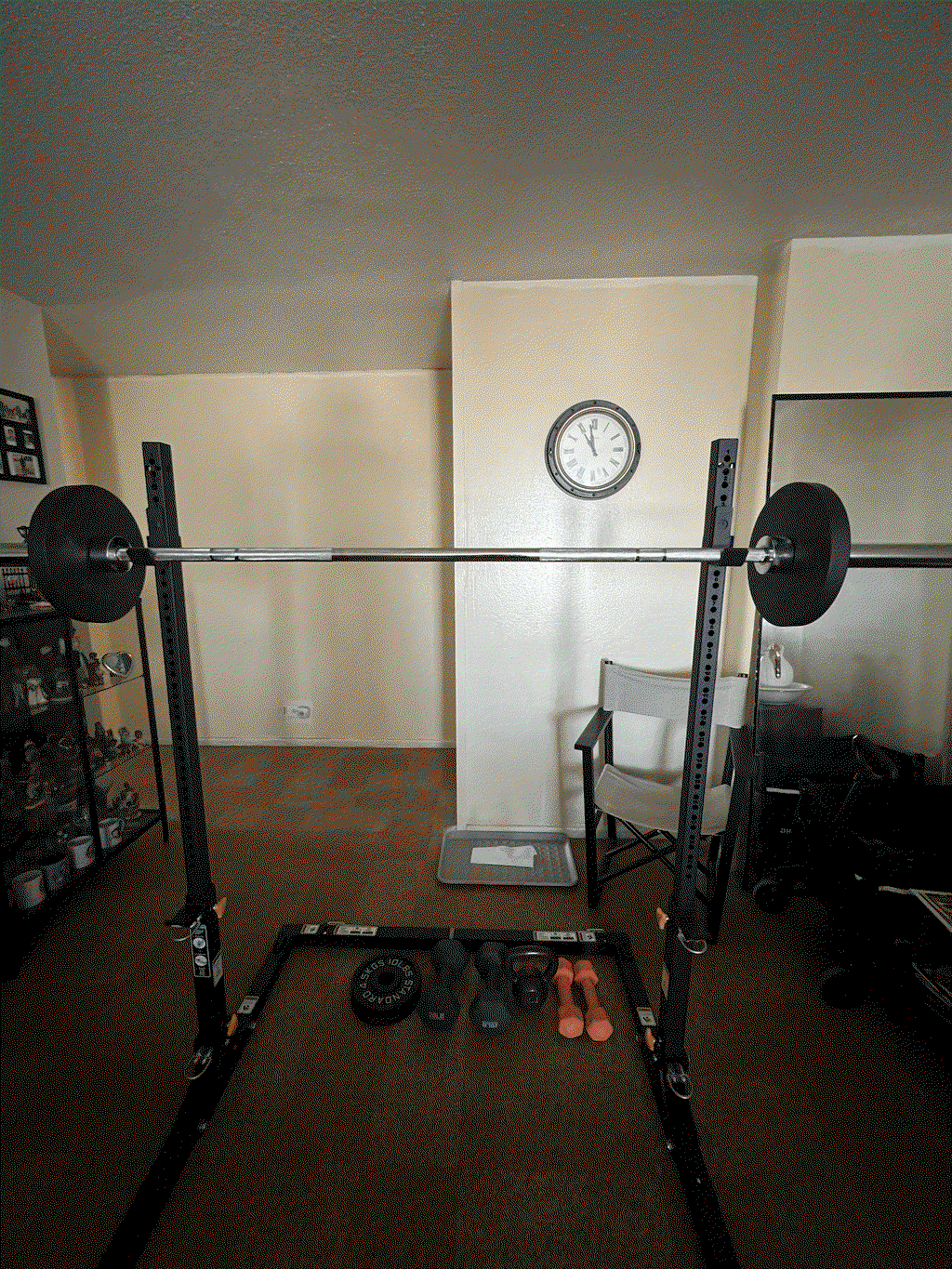
- Resistance training is the primary signal for maintaining (or gaining) muscle
- Protein provides the substrate to support that signal
So those “worst-case” lean mass numbers largely reflect untrained, low-protein individuals in a significant calorie deficit.
What Happens When You Do It Right?
When resistance training and adequate protein are included, the outcome changes dramatically.
In a 6-month study (~200 participants) that incorporated both:
- Average weight loss: ~13% body weight
- Muscle loss: only ~3% of total weight lost
That’s a massive improvement compared to the 25–40% seen earlier.
GLP-1s don’t “cause” muscle loss—they suppress appetite, which lowers calorie intake. The body then adapts based on the signals you provide.
In practice:
- No lifting + low protein → muscle loss
- Lifting + adequate protein → mostly fat loss
How to Train
Effective protocols look exactly like what you’d expect:
- 3–5 sessions per week
- 60–85% of 1RM (heavy enough to maintain a strength signal)
- 6+ sets per muscle group per week
- Sets taken within ~3 reps of failure
Prioritize compound lifts and progressive overload. Cardio is optional—but lifting should be the focus.
Protein Targets
- 1.2 g/kg/day — absolute minimum
- 1.6 g/kg/day — solid target
- 2.0 g/kg/day — high-end coverage
Protein also increases satiety and slows gastric emptying—effects that complement GLP-1s well.
Calories Still Matter
GLP-1s make a calorie deficit easier—sometimes too easy. Some people end up eating far too little, which almost guarantees muscle loss.
A better approach:
- Aim for ~0.5–2 lb/week of weight loss
- ~1 lb/week is a strong, sustainable target
- Leaner individuals or longer timelines → aim toward the lower end
The Bottom Line
The idea that GLP-1s inherently “destroy muscle” doesn’t hold up.
A more accurate framing: GLP-1s amplify the consequences of your training and nutrition.
- No lifting → you lose muscle
- Lift + eat enough protein (and calories) → you mostly lose fat
That’s not new. It’s the same rule that has always governed physique outcomes.